


Question 01
Which opportunity matters most?
Too many dashboards, inconsistent KPIs and reporting that does not trigger action. Selection criteria, the decision owner and evidence required to continue are made explicit
Make reporting useful for the next decision by connecting metrics, baselines, alerts and scenarios to a named action owner. Work with leaders and operating users to define what a change means, which options deserve attention and how follow-up will be recorded. Dashboards and analytical workflows include metric definitions and source traceability so a team can investigate the evidence behind a recommendation.

A working conversation
Start with a real decision, the people involved and available data so business and technology share one problem frame
Start with management questions and a KPI tree, then design the full decision experience
Service overview
Business intelligence supports decisions when it begins with a management question and ends in action. Growing collections of dashboards, inconsistent metrics, and late reports often produce more information without clarifying accountability or the next choice. This service first defines recurring decisions, users, timing, available options, and the outcome that should improve.
We then design a KPI tree and specify each measure through its data source, frequency, owner, alert level, and interpretation limits. Management views show only what is needed to identify the situation, understand causes, compare scenarios, and select an action. Moving from an overall indicator to supporting detail should shorten analysis, not send the user through unrelated reports. Alerts require a meaningful threshold, context, accountable responder, and a record of the resulting action.
Typical outputs include KPI architecture, executive or operational dashboards, cause analysis, decision scenarios, alerts, and action loops. A prototype is reviewed with actual users so that language, visual priority, and workflow can be corrected before wider implementation. Data quality, performance, access, and maintenance are then tested as part of the delivery. Success is not the number of charts. It is reflected in faster answers, shared metric definitions, clearer ownership, and an explicit next action. This service suits management reporting, sales and operations, planning, and performance or risk monitoring where information must lead to a controlled decision.
Typical challenges
Put metrics, analysis and scenarios at the point of decision
Too many dashboards, inconsistent KPIs and reporting that does not trigger action. Selection criteria, the decision owner and evidence required to continue are made explicit

For "BI & decision intelligence", the question "Is the required data ready?" is examined through decision evidence, data readiness and clear criteria to proceed before delivery begins

For "BI & decision intelligence", the question "How will risk be controlled?" is examined through decision evidence, data readiness and clear criteria to proceed before delivery begins
Our process
Every stage has an explicit output and a continue-or-stop decision
Clarify the decision, stakeholders, constraints and current data. Review a sample report and one recurring decision with its accountable owners.
Output: A shared problem frameCompare options by value, feasibility and risk. Record assumptions, dependencies and the reasoning behind each priority for review.
Output: A prioritized opportunity portfolioDefine architecture, delivery method and continue-or-stop criteria. Include required sources, responsibilities and control points in the delivery plan.
Output: An executable roadmapEvaluate a bounded slice in a real workflow with real users. Compare results with a baseline and consider test limitations in the next decision.
Output: Decision-grade evidenceComplete controls, monitoring and capability transfer with your team. Transfer documentation, monitoring ownership and an incident path to the operating team.
Output: An owned operational solutionConfigurable services
The final combination follows your needs, maturity and constraints

Translate management questions into metrics, comparison periods and levels of detail. An executive view connects actual performance to the plan, interpretation limits and the next action owner. Review the design against the decisions that a management meeting needs to make.
Request consultation
Record shared metric definitions, calculation rules and source relationships. A semantic layer helps different reports use consistent logic. Changes to a definition can be reviewed with the business owner and communicated to affected users before they alter interpretation.
Request consultation
Define alert conditions, severity and an accountable recipient before activation. Include context and an investigation path in each signal. Review whether the alert distinguishes normal variation from a situation that needs action, and refine thresholds with operating users.
Request consultation
Show assumptions and constraints alongside each scenario result. Compare options with a baseline and examine sensitivity to changing inputs. Decision-makers can investigate uncertainty, discuss trade-offs and record which assumptions mattered most to their chosen course of action.
Request consultationWhy Data Wise
Compare business value, data readiness and delivery risk together. Record assumptions and selection reasons so priorities can be revisited when new evidence becomes available.
Each stage has a reviewable output and criteria for continuing or stopping. Compare the result with a baseline and real constraints before committing to the next delivery step.
The problem owner, data specialist and delivery owner work in one path. Define hand-offs and knowledge transfer so the organization retains responsibility for operating and improving the solution.
Possible engagement patterns
These patterns illustrate possible consulting journeys and are not claims about a named client or result

The "Scattered initiatives to roadmap" pattern for "BI & decision intelligence" defines a path from the current state to a measurable output the team can own

The "Reporting to decision loop" pattern for "BI & decision intelligence" defines a path from the current state to a measurable output the team can own

The "Pilot to operable solution" pattern for "BI & decision intelligence" defines a path from the current state to a measurable output the team can own

A final thought
The output should explain what to do now, what to defer and what evidence is required to continue
Technology independence, business-value focus and capability transfer keep the decision useful after the meeting ends
Who benefits
Scope and method adapt to organizational size, process complexity and data readiness
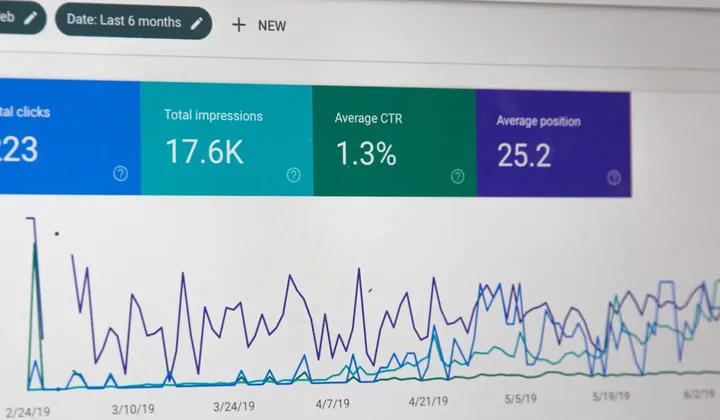
For "Management cockpits", the scope of "BI & decision intelligence" begins with one bounded problem, one decision owner and the data currently available

For "Sales and operations", the scope of "BI & decision intelligence" begins with one bounded problem, one decision owner and the data currently available

For "Performance and risk monitoring", the scope of "BI & decision intelligence" begins with one bounded problem, one decision owner and the data currently available
Resources and learning
A resource can prepare a project, enable a team or form part of a consulting output

The "Starter guide" resource for "BI & decision intelligence" is prepared for a defined audience, question and practical use so it supports the team’s next action
Request consultation
The "Practical insight" resource for "BI & decision intelligence" is prepared for a defined audience, question and practical use so it supports the team’s next action
Request consultation
The "Executive workshop" resource for "BI & decision intelligence" is prepared for a defined audience, question and practical use so it supports the team’s next action
Request consultation
The "Team course" resource for "BI & decision intelligence" is prepared for a defined audience, question and practical use so it supports the team’s next action
Request consultation
The "Curated reading" resource for "BI & decision intelligence" is prepared for a defined audience, question and practical use so it supports the team’s next action
Request consultation